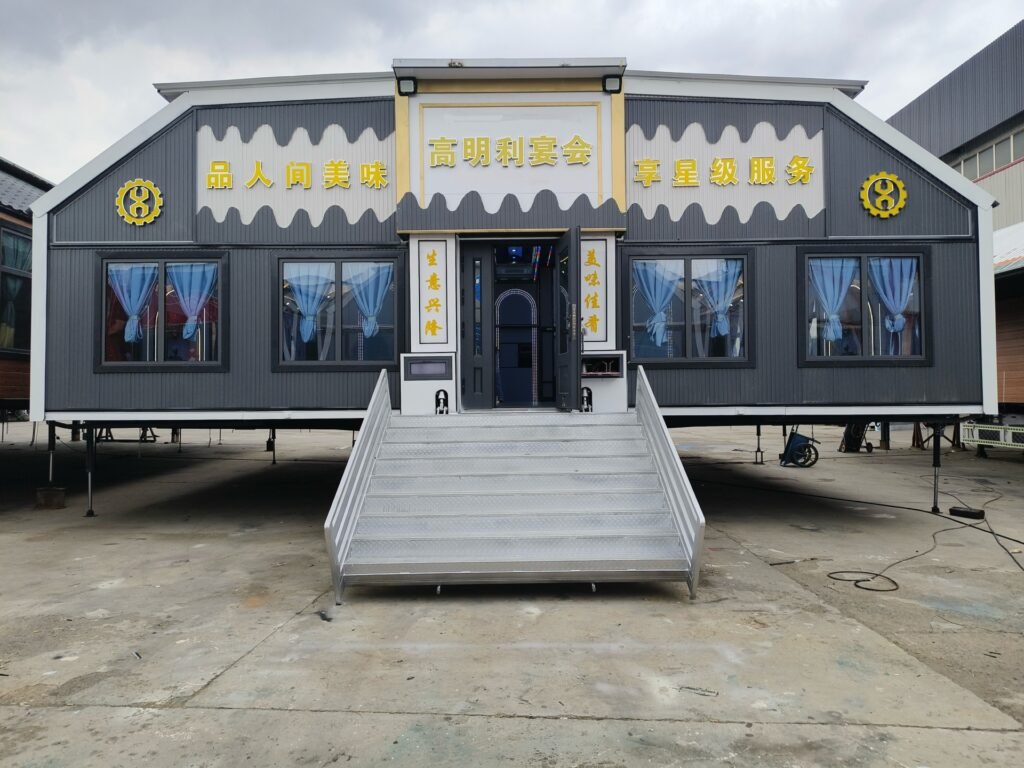
The right mobile event venue begins with a project brief, not a model number. A truck-based hall and a semi-trailer-based hall may both create an event space after positioning and setup, but they bring different questions about transport, site access, layout and operating responsibility. This guide helps you prepare those questions before requesting a configuration.
Mobile Banquets currently groups MB57, MB73 and MB96 under its banquet truck family. MB140, MB160 and MB190 are presented as banquet semi-trailer models in the product range. These are product-family labels, not a guarantee that any model can be registered, transported or operated at your destination. Local requirements and the final project configuration must be checked separately.

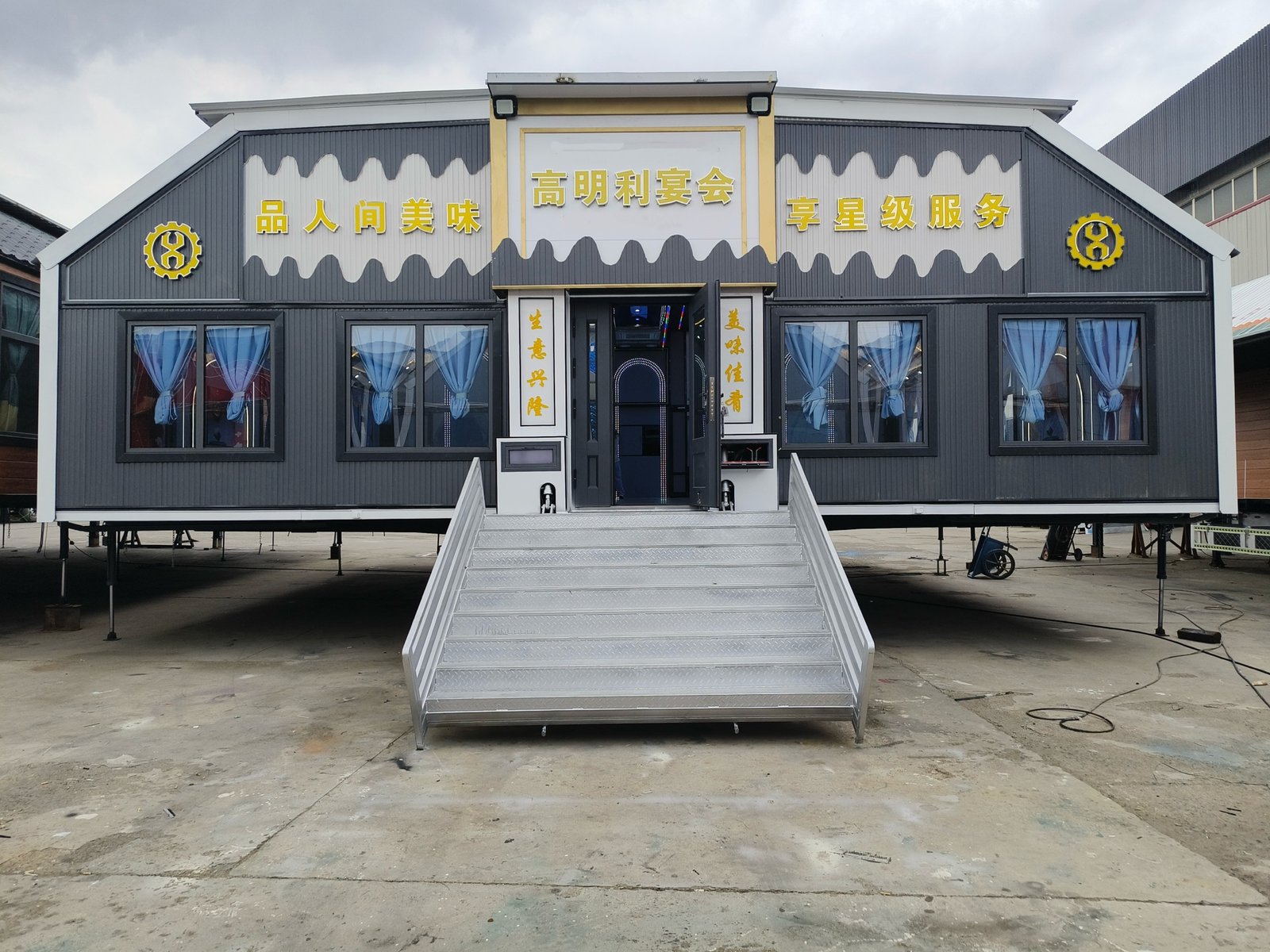
Start with the event you want to operate
Will the venue serve weddings, corporate hospitality, community gatherings or a rental fleet? Will it stay at one site for a season, or move between locations? How will guests enter, circulate and leave? Is the priority a dining layout, a reception layout or a flexible shell for different clients?
Write down the likely uses, but distinguish a possible application from a proven installation. If you are discussing several cities or sites, prepare a separate access and operating brief for each. A model that looks promising in a brochure still needs a site-level review.
Four questions that make the comparison useful
1. Where will the unit travel and be installed?
Record the country, city and exact type of site. Ask a local transport professional about the route, permitted dimensions and weight, vehicle or trailer classification, road permissions and any escort requirements that might apply. Then review site entrance width, turning space, ground conditions, slope and access for unloading or positioning. Do not assume that a venue can simply be driven to every event address.
2. What usable layout do you need?
A nominal floor-area figure cannot tell you how the entrance, service area, tables, circulation and exits will work for your event. Draw a simple plan showing guest flow and any space needed for catering, AV, storage or a reception zone. Share the intended event type and expected guest range as planning inputs, not as a promise of approved occupancy. Ask for a model-specific drawing and review it against local fire, accessibility and venue rules.
3. Who supplies and manages the transport arrangement?
For a truck-based option, clarify the exact vehicle and body configuration. For a semi-trailer-based option, clarify the tractor or towing arrangement, chassis specification, coupling, positioning and responsibilities at the destination. In either case, ask which party handles permits, delivery, local registration assessments and site preparation. These details are project-specific and cannot be settled by a generic comparison chart.
4. What is included in the venue scope?
List the requested interior finish, lighting, audio, ventilation, furniture, utilities and any catering provisions. Separate essential items from optional ones. Ask the supplier to identify what is included, what requires site-side power or infrastructure, and what will be supplied locally. Obtain the configuration list and drawing for the particular proposal; do not rely on photographs of another project’s interior.
A decision worksheet
- Model examples: Compare the MB57, MB73 and MB96 truck family with the MB140, MB160 and MB190 semi-trailer family. Request the current model page and selected configuration.
- Vehicle arrangement: Confirm the truck and body specification or the trailer, chassis and tractor arrangement for the proposed unit. Request a technical drawing and transport plan.
- Site fit: Verify route, entrance, positioning and support conditions for either family. Provide site photos, measured access and a local review.
- Event layout: Confirm furniture, service and guest circulation for the actual project. Request a project-specific layout drawing.
- Permissions: Confirm destination-country road and venue requirements with local professionals and authorities.
This worksheet is deliberately a checklist, not a specification contest. The selected truck or trailer is only part of the operating system: the destination rules, site and event brief matter just as much.
Ask for evidence before comparing offers
Request a drawing for the exact model and configuration, a written equipment and fit-out list, and photographs or a clearly labelled demonstration showing the relevant unit. If an expansion video is sped up, treat it as a visual explanation—not a verified setup-time test. Confirm who supplied and approved any concept rendering. Ask what must be checked by local transport, engineering and venue professionals before a purchase decision.
You can also ask the supplier to explain differences between the quoted configuration and any model page or demonstration material. This is especially important when a project requires a locally sourced chassis or a distinct interior plan.
Copy this project brief
- Destination: Country and city; likely event sites and route.
- Operating model: Own events, rentals, venue operation or channel distribution.
- Events: Typical use cases, layout preference and planning guest range.
- Site: Entrance measurements, turning and positioning space, ground conditions, photos and power availability.
- Vehicle or trailer plan: Preferred arrangement and any local chassis or transport partner.
- Fit-out: Required furniture, lighting, AV, HVAC, catering and finishes.
- Timing: Target decision and event dates, subject to a confirmed project proposal.
- Questions: Which model-specific drawings, options and local checks are needed next?
Send your brief through the Mobile Banquets contact page. The team can then discuss which product family deserves a closer technical review. A proposal should confirm the exact configuration and its scope; this article does not establish price, delivery, legal compliance or suitability for a particular site.